Here’s the thing about learning to program: it’s not about memorizing syntax. Not really. Anyone can look up how to write a for-loop. The real spark, the moment that hooks you for life, is when you bend the machine to your will for the first time. It’s when you have an idea, you translate that idea into a few lines of logic, and you see it come to life on the screen. It feels like a superpower. The challenge has always been getting a newcomer, especially a kid, to that first “Aha!” moment as quickly as possible, before the frustration of abstract concepts sets in.
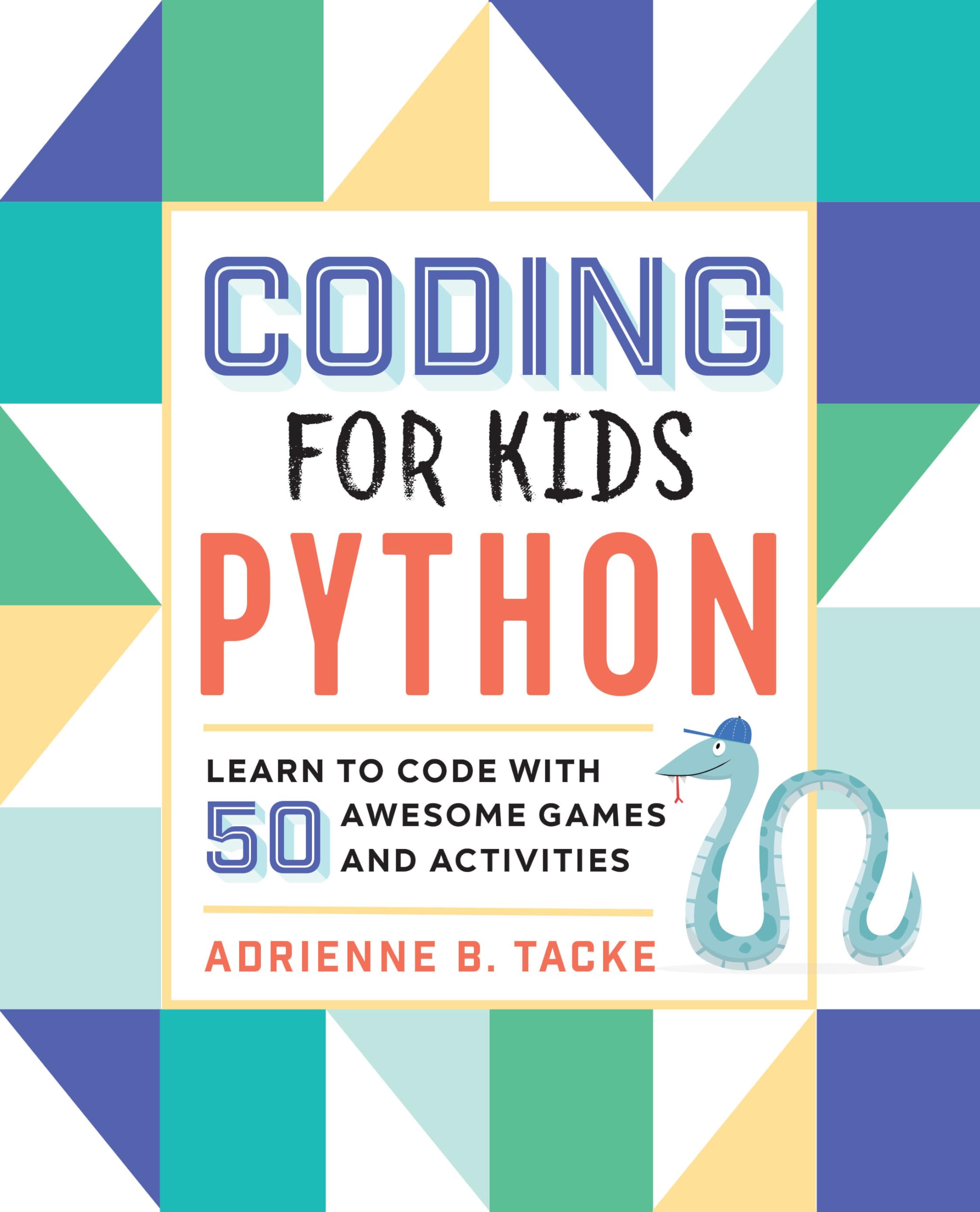
This book seems to get that. It’s not a dry, academic treatise on Python. Its entire approach is built around a feedback loop of tangible results. You don’t learn about variables in a vacuum; you use them to keep score in a game. You don’t just study conditional logic; you use it to make a monster appear if the player opens the wrong door. This is the correct way to start. It’s a guided exploration, not a lecture.
So, What’s the Real Deal Here?
The core philosophy is project-based learning. With 50 games and activities, a kid isn’t just reading theory. They are constantly building. Each project is a self-contained problem space. They type in the code, see it work, and get a little jolt of accomplishment. But the real learning, the part that matters, happens in the next step, which is where a parent or mentor comes in.
The book gives you the working program. The magic happens when you encourage the kid to break it. What happens if you change the player’s speed from 5 to 50? What if you change the color of the enemy from red to blue? What happens if you get the indentation wrong? The program crashes. Fantastic! Now you have a puzzle. Why did it crash? That is when you’re not just coding; you are debugging. You’re problem-solving. You’re building the mental model of how the system actually works. This book is a fantastic collection of working systems to start tinkering with.
Who Should Grab This book?
Let’s be clear about who this is for, and how to use it for maximum effect.
For the Aspiring Young Coder (Ages 9-13ish)
This is for the kid who likes puzzles, who takes their toys apart to see how they work, or who spends hours building elaborate systems in Minecraft. The age range says 9-12, and that feels right. A motivated 9-year-old with some help can do it, and a 13-year-old can probably fly through it solo. The key is that they must have a flicker of interest. You can’t force this. This book is the kindling, not the spark itself.
For the Parent or Mentor
That’s arguably the most important audience for this book. If you’re a parent who knows nothing about code, the book is your guide just as much as it is your child’s. You can learn alongside them. If you are a programmer, this book is your lesson plan. It saves you the immense effort of inventing a curriculum from scratch.
Your job isn’t to be the teacher with all the answers. Your job is to be the lead explorer. Here’s your mission:
- Encourage tinkering. After every completed project, ask “What if…?” What if we add another ball? What if we make the maze harder? Let your kid be the one to come up with the ideas.
- Embrace errors. When the code breaks, don’t just fix it. Turn it into a detective game. “The computer says the error is on line 42. What do you think is on line 42? Let’s look together.” This is the single most valuable skill you can teach.
- Celebrate small victories. Getting a character to move left and right is a huge deal. Making the score go up by 10 instead of 1 is a triumph. Acknowledge it.
This book isn’t about teaching a child to become a professional Python developer. It’s about planting a seed. It is about teaching a way of thinking—breaking big problems down into small, logical steps. The goal isn’t to complete all 50 activities. The goal is to get to the point where your kid looks at a finished project and says, “That was cool, but you know what would be even better? I’m going to try to build my own thing.” That’s the moment this book is aiming for. And from the looks of it, it provides a pretty solid launchpad to get there.