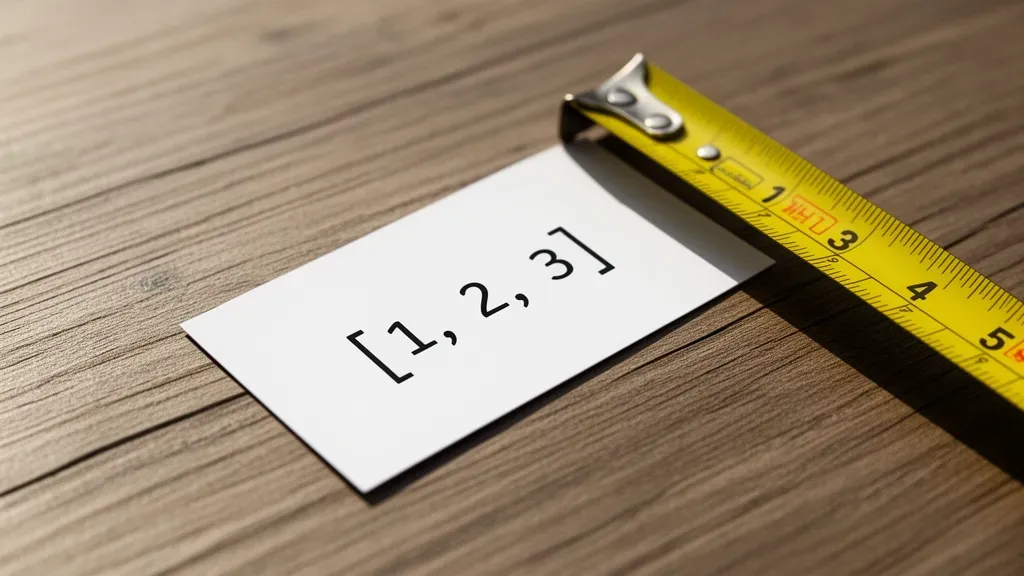
A tf.Tensor is the central data structure in TensorFlow. Do not mistake it for a simple multi-dimensional array like those found in NumPy, though it bears a superficial resemblance. A tensor is more than that; it is an immutable n-dimensional array of typed elements. This immutability is not a minor detail; it is a foundational design choice. Once you create a tensor, its value cannot be altered. This property is essential for building and executing TensorFlow’s computational graphs, ensuring that operations are reproducible and side-effect-free.
To materialize a tensor, you typically use tf.constant(). This function takes a Python literal or a NumPy array and converts it into a tf.Tensor object. The “constant” in the name is a direct hint at the object’s immutable nature.
import tensorflow as tf
import numpy as np

# A 0-D tensor, often called a scalar
scalar_tensor = tf.constant(42)

# A 1-D tensor, or vector
vector_tensor = tf.constant([1, 2, 3, 4, 5])

# A 2-D tensor, or matrix
matrix_tensor = tf.constant([[1, 2], [3, 4]])

# Creating a tensor from a NumPy array
numpy_array = np.array([[5, 6], [7, 8]])
tensor_from_numpy = tf.constant(numpy_array)
The contents of a tensor are not limited to numerical types. You can create tensors of strings or booleans. However, a single tensor must be homogeneous; all its elements must share the same data type. TensorFlow will attempt to infer the data type from the input values, but you can, and often should, specify it explicitly for clarity and to avoid subtle bugs.
# A tensor of strings
string_tensor = tf.constant(["hello", "world"])

# A tensor of booleans with an explicit dtype
bool_tensor = tf.constant([[True, False], [False, True]], dtype=tf.bool)
It is crucial to distinguish a tf.Tensor from a tf.Variable. A tensor represents a fixed value-a constant in your computation. A tf.Variable, on the other hand, represents mutable state. It is a special tensor-like object whose value can be changed by running operations on it. You use variables to hold and update the parameters of a machine learning model, such as its weights and biases. Confusing the two is a common source of error for novices. A tensor is data; a variable is state.
# This is a constant, its value cannot be changed.
a_tensor = tf.constant([1.0, 2.0])

# This is a variable, its value can be updated.
a_variable = tf.Variable([1.0, 2.0])

# Attempting to re-assign a tensor will fail.
# a_tensor[0] = 3.0 # This would raise a TypeError.

# Re-assigning a variable's value is a core operation.
a_variable.assign([3.0, 4.0])
This fundamental distinction between immutable data and mutable state is a pillar of the TensorFlow programming model. The data flows through the computational graph as tensors, while the graph’s trainable parameters are held in variables. The tensor itself is a handle to a block of memory, which might reside on a CPU, GPU, or TPU. This abstraction allows TensorFlow to manage data placement and movement efficiently, but as a programmer, you must first grasp the nature of the handle itself. A tensor is a promise of a value, fixed at the time of its creation.

𝟐𝟎𝟐𝟔 𝐔𝐩𝐠𝐫𝐚𝐝𝐞𝐝 for Apple Watch Charger Magnetic Fast Charging Cable [Portable] Magnetic Wireless Charging Compatible with iWatch Series Ultra/SE/11/10/9/8/7/6/5/4/-[3.3FT] White
$8.99 (as of June 13, 2026 06:05 GMT +00:00 - More infoProduct prices and availability are accurate as of the date/time indicated and are subject to change. Any price and availability information displayed on [relevant Amazon Site(s), as applicable] at the time of purchase will apply to the purchase of this product.)Know thy tensor’s shape and type
A tensor is not just a container for a value; it is a precisely defined mathematical object. Its identity is composed of three essential properties: its rank (the number of dimensions), its shape (the size of each dimension), and its data type (the type of elements it holds). To work effectively with tensors, you must be able to query these properties at will. The .shape and .dtype attributes are your primary instruments for this inspection.
The dtype specifies the kind of data stored within the tensor. TensorFlow supports a wide range of numeric types, from 8-bit integers (tf.int8) to 64-bit complex numbers (tf.complex128), as well as non-numeric types like tf.string and tf.bool. The default for floating-point numbers is tf.float32, and for integers, it is tf.int32. Choosing the correct dtype is not an academic exercise; it has direct consequences for memory usage, computational speed, and numerical precision. Using tf.float16 might speed up your model on a modern GPU, but it can also lead to underflow or overflow if your values span a wide dynamic range.
The shape describes the tensor’s geometry. It is exposed as a tf.TensorShape object, which is iterable and behaves like a tuple of integers. The length of this tuple is the tensor’s rank. A scalar (rank 0) has an empty shape (). A vector (rank 1) has a shape like (D0,), where D0 is the number of elements. A matrix (rank 2) has a shape of (D0, D1), representing its rows and columns. This pattern extends to tensors of any rank.
# Let's create a tensor and inspect it.
rank_3_tensor = tf.constant([
  [[0, 1, 2, 3, 4],
   [5, 6, 7, 8, 9]],
  [[10, 11, 12, 13, 14],
   [15, 16, 17, 18, 19]],
  [[20, 21, 22, 23, 24],
   [25, 26, 27, 28, 29]],
])

print(f"Data type of every element: {rank_3_tensor.dtype}")
print(f"Number of axes (rank): {rank_3_tensor.ndim}") # .ndim is an alias for shape.rank
print(f"Shape of tensor: {rank_3_tensor.shape}")
print(f"Elements along axis 0: {rank_3_tensor.shape[0]}")
print(f"Elements along the last axis: {rank_3_tensor.shape[-1]}")
print(f"Total number of elements: {tf.size(rank_3_tensor).numpy()}")
This strict typing and shaping is a core feature of TensorFlow, not a bug. It prevents a vast category of errors that arise in more dynamically typed systems. If you attempt an operation with tensors of incompatible shapes or types, TensorFlow will immediately raise an error. For instance, you cannot perform matrix multiplication (tf.matmul) on two matrices unless the inner dimension of the first matrix matches the outer dimension of the second. You cannot add a tf.float32 tensor to a tf.int32 tensor without explicitly casting one to match the other. These are not arbitrary restrictions; they reflect fundamental mathematical rules. Learn to appreciate these errors. They are signposts indicating a flaw in your logic.
# A demonstration of a shape error
mat_x = tf.constant([[1, 2]])     # Shape (1, 2)
mat_y = tf.constant([[1, 2]])     # Shape (1, 2)

# This will raise an InvalidArgumentError because the inner dimensions (2 and 1) mismatch.
# result = tf.matmul(mat_x, mat_y)

# A demonstration of a dtype error
tensor_f32 = tf.constant(1.0, dtype=tf.float32)
tensor_f64 = tf.constant(1.0, dtype=tf.float64)

# This will raise a TypeError.
# result = tensor_f32 + tensor_f64
A tensor’s shape can also be partially or fully unknown. This is represented by using None as a placeholder for a dimension’s size. A shape like (None, 64) describes a matrix with an unknown number of rows but exactly 64 columns. This is indispensable when defining models that must operate on input batches of varying sizes. While this provides flexibility, it shifts some shape checking from graph-construction time to execution time. A wise programmer remains aware of the degree to which their tensor shapes are specified. An operation that is valid for a shape of (10, 64) may not be valid for a shape of (1, 64), and a fully specified shape allows TensorFlow to catch more errors earlier. Knowing a tensor’s shape and type is not optional; it is a prerequisite for controlling the flow of data through your computations.
Bend tensors to your will
The immutability of a tensor is not a prison. While you cannot alter a tensor’s contents in-place, you can create new tensors from it with surgical precision. The primary tools for this are indexing, slicing, and reshaping. These operations should be familiar in principle to anyone who has worked with Python lists or NumPy arrays, but in TensorFlow, they are operations that produce new tensors within the computational graph.
Indexing allows you to access a specific scalar element, while slicing extracts a sub-tensor. TensorFlow uses standard Python indexing conventions, including support for negative indices to count from the end and colons for slicing start:stop:step.
rank_2_tensor = tf.constant([[1, 2, 3], [4, 5, 6], [7, 8, 9]])

# Get a single scalar element (a 0-D tensor)
print(f"Single element: {rank_2_tensor[1, 1]}")

# Slice to get a row (a 1-D tensor)
print(f"Second row: {rank_2_tensor[1, :]}")

# Slice to get a column (a 1-D tensor)
print(f"Second column: {rank_2_tensor[:, 1]}")

# A more complex slice
print(f"Sub-matrix:n{rank_2_tensor[0:2, 1:3]}")
More powerful than simple slicing is reshaping. The tf.reshape operation allows you to change a tensor’s shape without changing the order or total number of its elements. This is not a mere convenience; it is a fundamental operation for preparing data for different layers in a neural network. For example, you might flatten a batch of images from a 4-D tensor of shape (batch, height, width, channels) into a 2-D tensor of shape (batch, height * width * channels) to feed it into a fully connected layer. A common trick is to use -1 in one dimension of the target shape; TensorFlow will automatically compute the correct size for that dimension to maintain the total number of elements.
original_tensor = tf.constant([[1, 2, 3], [4, 5, 6]]) # Shape (2, 3)

# Reshape to (3, 2)
reshaped_tensor = tf.reshape(original_tensor, (3, 2))

# Flatten the tensor into a vector
flattened_tensor = tf.reshape(original_tensor, (6,))

# Use -1 to infer a dimension
inferred_shape_tensor = tf.reshape(original_tensor, (3, -1))
# TensorFlow calculates the last dimension to be 2.
Beyond reshaping, you will constantly encounter broadcasting. This is a mechanism that allows TensorFlow to perform element-wise operations on tensors of different, but compatible, shapes. Without broadcasting, you would need to manually tile your smaller tensor to match the shape of the larger one-a verbose and inefficient practice. Broadcasting works by comparing the dimensions of the two tensors, starting from the trailing dimension. Two dimensions are compatible if they are equal or if one of them is 1. TensorFlow virtually “stretches” the dimension of size 1 to match the other.
x = tf.constant([1, 2, 3])      # Shape (3,)
y = tf.constant(2)             # Shape ()
z = tf.constant([10, 20, 30])  # Shape (3,)

# The scalar y is broadcast to the shape of x for addition.
print(f"x + y = {x + y}")

# Element-wise addition of two tensors with the same shape.
print(f"x + z = {x + z}")

a = tf.constant([[1], [2], [3]]) # Shape (3, 1)
b = tf.constant([10, 20, 30])    # Shape (3,)

# Broadcasting in 2D:
# a is shape (3, 1)
# b is shape    (3,)
# b is stretched to match a's shape, becoming a (3, 3) tensor virtually.
# The result is a (3, 3) matrix.
print(f"a + b =n{a + b}")
This same broadcasting logic applies to all element-wise arithmetic operations like tf.multiply (or the * operator) and tf.subtract (or -). Do not confuse element-wise multiplication (*) with matrix multiplication (tf.matmul), which follows the rules of linear algebra and does not use broadcasting in the same way. Finally, if you need to perform an operation between tensors of different data types, you must explicitly convert one to match the other using tf.cast. TensorFlow will not perform implicit type promotion for you, as this can hide bugs and performance issues. An explicit cast is a declaration that you, the programmer, are aware of the potential consequences of the conversion, such as a loss of precision.
float_tensor = tf.constant([1.1, 2.2, 3.3], dtype=tf.float32)

# Cast to integer type. Note the truncation.
int_tensor = tf.cast(float_tensor, dtype=tf.int32)

# Now arithmetic operations are possible.
result = int_tensor * 2
Mastering these operations-slicing, reshaping, broadcasting, and casting-is the difference between fighting the framework and making it work for you. They are the vocabulary you use to express data transformations. A fluent TensorFlow programmer thinks in terms of these transformations, composing them to build complex data processing pipelines and model architectures. The tensor is immutable, but your ability to derive new tensors from it is limitless. A tensor is not just a static block of data; it is the starting point for a new computation, a new tensor waiting to be created. This flow of creating new tensors from old ones is the essence of computation in TensorFlow. For instance, expanding a tensor’s rank is also a common requirement, handled by tf.expand_dims. This adds a new dimension of size 1 at a specified axis, which is often used to prepare a vector for broadcasting or to add a channel dimension to a batch of single-channel images.
A tensor must speak the local tongue
A TensorFlow program does not operate in splendid isolation. It is part of a larger ecosystem of Python libraries, and its most important neighbor is NumPy. TensorFlow’s deep and seamless integration with NumPy is not an accident; it is a critical design feature. To be effective, a tensor must be able to “speak the local tongue,” and in the world of Python numerical computing, that tongue is the NumPy array. This fluency allows you to leverage the vast array of tools built around NumPy, from data visualization with Matplotlib to classical machine learning with Scikit-learn.
The primary mechanism for converting a tensor into a NumPy array is the .numpy() method. This method requires no arguments and returns a NumPy ndarray with the same data and shape as the tensor. This is the explicit bridge from the TensorFlow world back to the familiar landscape of standard Python.
matrix_tensor = tf.constant([[1, 2], [3, 4]])

# Convert the tensor to a NumPy array
numpy_array = matrix_tensor.numpy()

print(f"Original tensor:n{matrix_tensor}")
print(f"Type after conversion: {type(numpy_array)}")
print(f"NumPy array:n{numpy_array}")
Do not be deceived by the simplicity of this call. The .numpy() method can be a costly operation. A tf.Tensor might reside in the memory of a GPU or a TPU, far from the host CPU where your Python interpreter runs. Calling .numpy() triggers a data transfer from the accelerator device to the host’s main memory. If you place such a call inside a performance-critical loop, you are building a bottleneck that forces the accelerator to halt and wait for the slow transfer to complete. Inside a function decorated with @tf.function, calling .numpy() is even more problematic, as it breaks the static computational graph that TensorFlow works so hard to build and optimize. Use this method when you are truly done with GPU-accelerated computation and need to inspect a final result or pass it to another library.
The bridge works in both directions. Most TensorFlow operations will happily accept NumPy arrays as arguments wherever a tf.Tensor is expected. TensorFlow will automatically convert the NumPy array into a tf.Tensor and move it to the appropriate device for the computation. This makes it trivial to integrate data prepared with NumPy into your TensorFlow models.
import numpy as np

tensor_a = tf.constant([[1, 1], [1, 1]])
numpy_b = np.array([[2, 2], [2, 2]], dtype=np.int32)

# TensorFlow automatically converts numpy_b to a tensor for the operation.
result = tf.add(tensor_a, numpy_b)

print(f"Result is a tf.Tensor:n{result}")
There is a crucial optimization to understand here. If the tf.Tensor is already located on the CPU’s memory, the conversion to a NumPy array can be a zero-copy operation. The resulting NumPy array and the original tf.Tensor will share the same underlying memory buffer. This is highly efficient, but it comes with a sharp edge. If you modify the NumPy array in-place, you are directly changing the data that the supposedly immutable tf.Tensor points to. The tf.Tensor object itself remains unchanged-it is still a handle to that block of memory-but the contents of that memory have been altered. This behavior is a concession to performance that breaks the pure functional model, and it is your responsibility to be aware of it.
# Create a tensor on the CPU
cpu_tensor = tf.constant([1, 2, 3])

# Create a NumPy view of its memory
numpy_view = cpu_tensor.numpy()

# Modify the NumPy array in-place
numpy_view[0] = 100

# The change is reflected in the tensor's data buffer
print(f"Original tensor after modification: {cpu_tensor}")
This tight coupling is a double-edged sword. It provides a high-performance bridge to the rest of the Python scientific computing stack, but it requires you, the programmer, to be mindful of where your data lives and who might be modifying it. You must consciously manage the boundary between the graph-based, accelerated world of TensorFlow and the eager, CPU-bound world of NumPy. Crossing this boundary is not free, and understanding the cost is essential for building high-performance systems. Whether you are feeding a NumPy array into a model or pulling a tensor out to plot it, you are making a decision about data locality and computational context.