So you want to learn Python. You and everyone else. The world is drowning in Python books, tutorials, and six-minute videos that promise to make you a master. Most of them are junk. They teach you syntax, but they don’t teach you the discipline. They show you how to write code, but not how to be a programmer.
I’ve seen this pattern a thousand times. A new developer picks up a language. They discover the loops and the conditionals. They can make the bits flip. But they don’t understand the *why*. They don’t grasp the idioms, the structure, the professional practices that separate a mere coder from a software craftsman. They end up writing Java in Python, or C in Python, and creating a mess that someone else—probably you or me—has to clean up later.
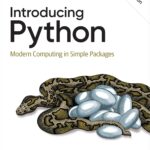
That’s the core problem. Now, let’s look at the book, Introducing Python. The first thing you notice is the page count. At over 600 pages, that’s not a weekend read. Good. Learning your tools properly should not be a trivial affair. This suggests a certain gravitas. The subtitle, “Modern Computing in Simple Packages,” tells me it’s not just about the language core; it is about how the language is used in the real world, with real libraries. This is promising.
Who Should Pick Up The book?
Let’s be clear. A tool is only as good as the hand that wields it. This book appears to be for those who want to learn how to wield the tool correctly. I see two primary audiences:
- The Serious Beginner. You’ve never written a line of code, but you are not looking for a “get rich quick” scheme. You want to build a foundation for a career. You understand that learning the fundamentals matéria, and you are willing to do the work. The book looks like it will serve you well by starting you on the right path, not the easy one.
- The Migrating Professional. You are a Java, C#, or Ruby developer. You know how to program. Now you need to learn Python for a new project or a new job. Your biggest danger is writing your old language using Python syntax. A book like this, especially a 3rd edition, should be steeped in the idiomatic way of doing things in Python. It should teach you to *think* in Python.
If you’re looking for a quick-and-dirty reference to bang out a script before lunch, this isn’t it. Go find a cheat sheet online. That is for people who are building things that are meant to last.
What Signals Its Quality?
Look at the evidence. We programmers are supposed to be rational, aren’t we? So let’s look at the facts we can glean.
First, it’s a 3rd edition. Books don’t get to a third edition by being useless. It means the material has been tested in the real world, found valuable, and refined. It has survived contact with the enemy: the reader. The fact that it is being updated for 2025 means it’s not teaching you the Python of yesteryear; it’s preparing you for what’s current and what’s coming.
Second, that subtitle, “Modern Computing in Simple Packages,” is key. Professional Python development is not about reinventing the wheel. It’s about skillfully composing powerful libraries. A book that introduces you to this ecosystem from the start is a book that understands how software is actually built today.
Finally, it’s an O’Reilly book. While not a guarantee of perfection, it’s a strong signal. They have a reputation to uphold. They’re a known quantity in a field full of noise.
So, is the book the one? Maybe. It shows the signs of a serious, professional-grade introduction to the craft. If your goal is to become a software professional who happens to use Python, this appears to be a solid starting point. Don’t just learn to code; learn your craft. This book seems to respect that choice.